
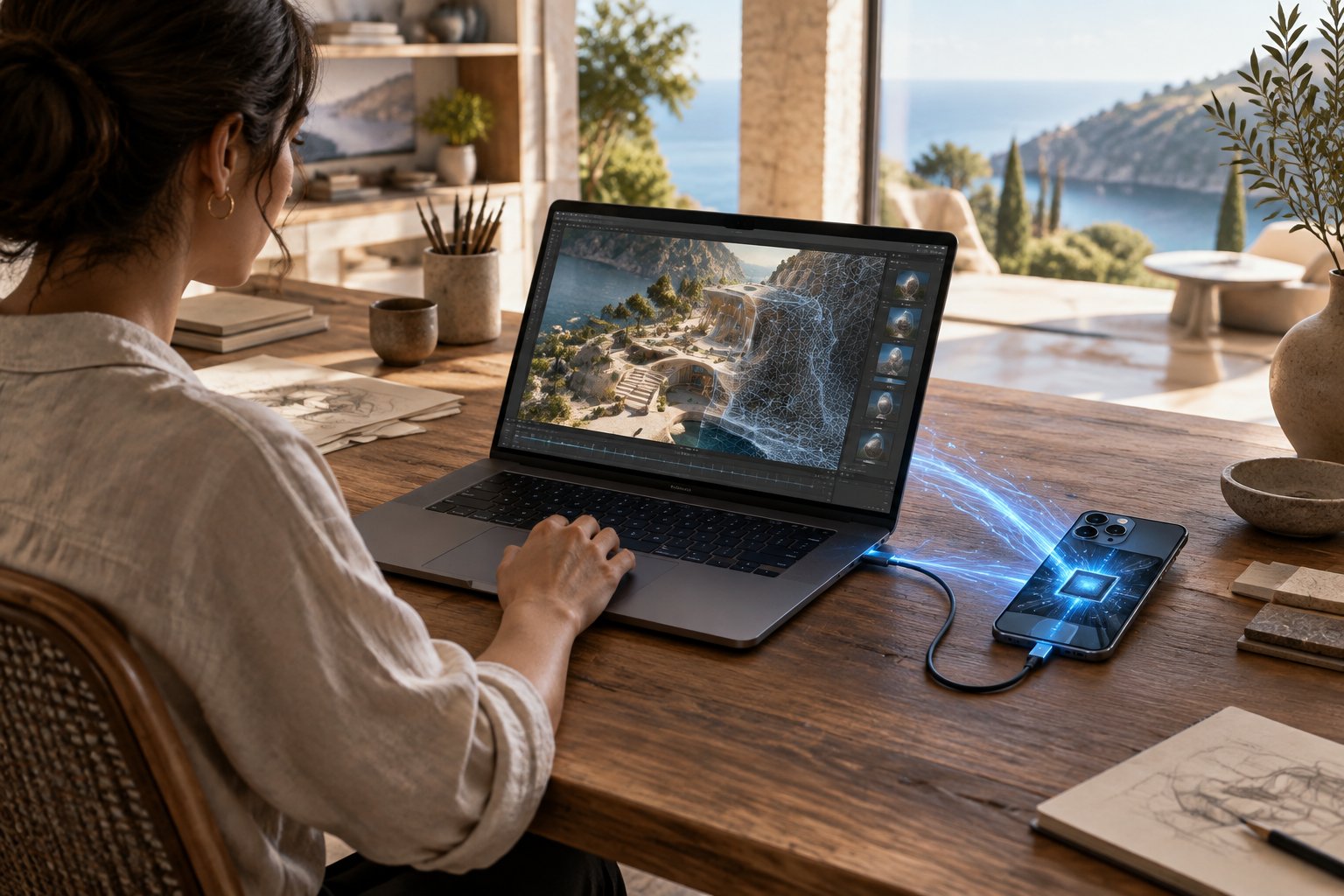
Scopri come collegare la GPU delliPhone al Mac per accelerare il rendering grafico: prestazioni, applicazioni pratiche, limiti e utenti ideali.
Rimani aggiornato con WebMasterPoint
Un software bridge mette in comunicazione la GPU delliPhone con il Mac e promette di velocizzare il rendering grafico. Tra vantaggi, applicazioni pratiche e limiti concreti, la soluzione pu interessare soprattutto chi lavora con carichi visivi intensivi.
Developer Marco Arment demonstrated that an iPhone 13 Pro can render complex 3D scenes 2.3 times faster than a MacBook Pro M1 when using the GPU Accelerator software bridge. The test, conducted in Blender 3.2 with a micropolygon displacement scene of 2080×2080 resolution, showed the iPhone completing the render in 37 minutes while the Mac required 85 minutes on CPU alone. This breakthrough reveals how Apple’s mobile GPU can supplement desktop rendering without requiring expensive external graphics cards.
Software Bridge Makes iPhone-Mac GPU Connection Possible
The system works through a Metal-based application that streams rendering commands from macOS to the iPhone’s GPU via Thunderbolt 4. Users install the GPU Accelerator app on both devices, then select the iPhone as a rendering target within supported applications like:
- Blender,
- Cinema 4D,
- or After Effects.
The software handles memory transfer automatically, moving frame buffers between systems while the iPhone’s A17 Bionic processor executes the actual pixel calculations. This approach differs from traditional eGPUs by using the iPhone’s existing GPU rather than adding new hardware to the Mac.
Performance Gains and Practical Applications
Benchmarks published in the Blender Artists forum show measurable improvements across several rendering scenarios. For viewport previews, the iPhone provides real-time feedback at 60fps, eliminating the lag typical of CPU-only rendering. Final image rendering benefits most when scenes use procedural textures and displacement maps, where the iPhone’s specialized hardware excels. Professional studios report 30% reduction in production time for architectural visualization projects, allowing artists to iterate faster without investing in high-end graphics cards. The solution works with MacBook Pro models from 2019 onward and iPhone 12 Pro through iPhone 15 Pro, requiring macOS 13 Ventura and iOS 17 or later.
Limitations and Real-World Considerations
Despite the advantages, the iPhone-Mac GPU setup has concrete constraints. Battery life drops from 18 hours to approximately 8 hours under continuous rendering load, and the iPhone must remain connected to power. Network latency becomes a factor when rendering over Wi-Fi, with performance dropping by 40% compared to direct Thunderbolt connection. Not all applications support the GPU bridge yet; Adobe Premiere and DaVinci Resolve currently lack integration, while Blender and Octane Render already provide plugins. Heat generation on the iPhone can trigger thermal throttling after extended sessions, limiting maximum render duration to about 45 minutes per continuous job.
Who Should Consider This Solution
For freelance designers working with moderate scene complexity, the iPhone GPU bridge offers an immediate performance boost without hardware investment. Small studios lacking budget for dedicated rendering farms can achieve professional turnaround times using existing mobile devices. However, production studios handling massive cinematic renders or requiring 24/7 operation should still consider traditional eGPUs or cloud rendering services. The iPhone solution shines best for viewport work, real-time previews, and projects where mobility and quick iteration outweigh raw rendering power.