
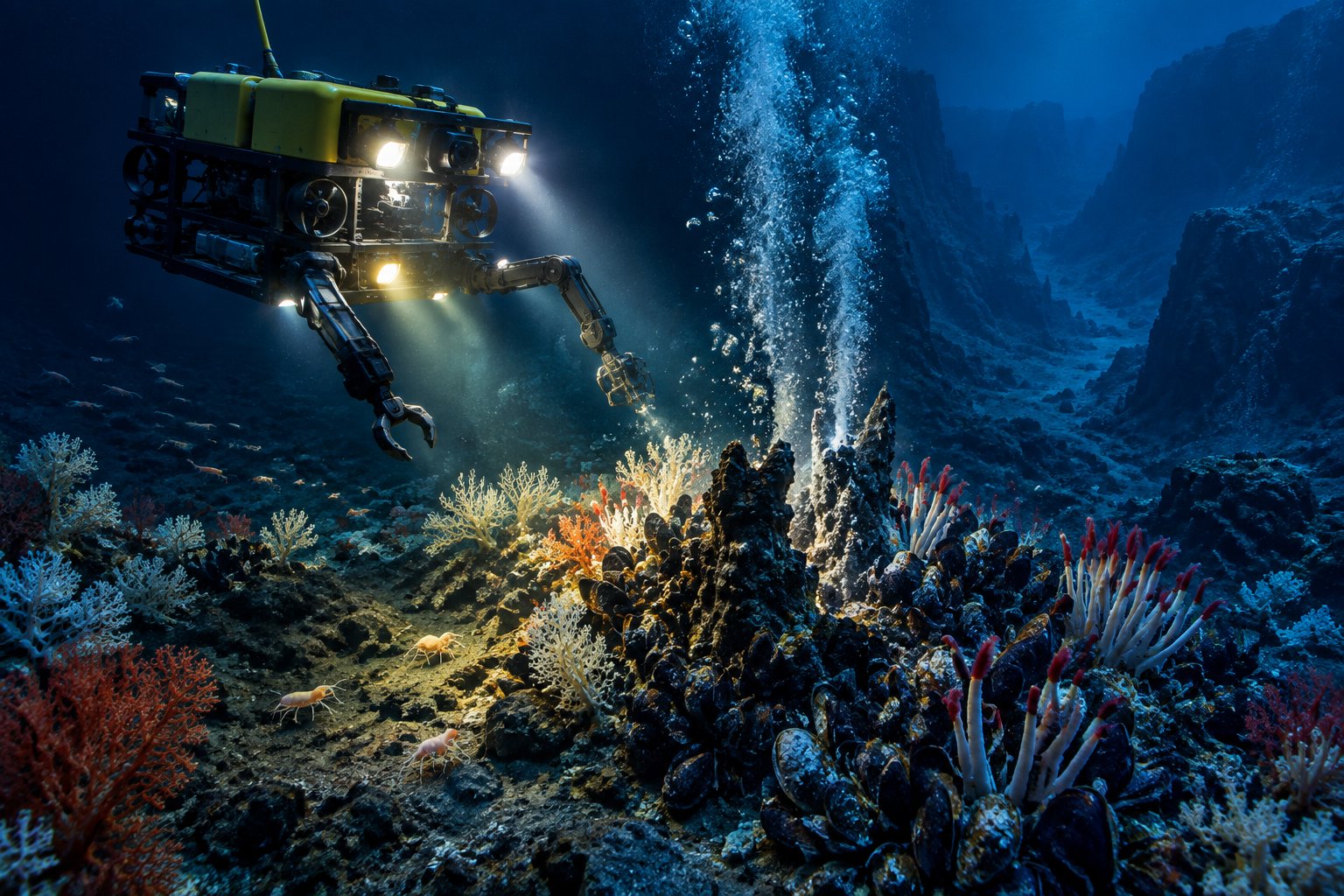
Il robot SuBastian esplora loceano a 4.500 metri: scopri le sue capacit e i dati allarmanti emersi dalle profondit marine.
Rimani aggiornato con WebMasterPoint
A 4.500 metri di profondità, il robot SuBastian ha esplorato un ambiente remoto, raccogliendo dati che destano preoccupazione. Le sue capacità e le scoperte della spedizione offrono nuovi indizi sulle condizioni degli abissi.
During a month-long expedition in July 2026, the remotely operated vehicle SuBastian descended to the edge of 4,500 meters off Trinidad and Tobago, mapping previously unknown cold seep ecosystems and revealing data that researchers describe as alarming for deep ocean health. Led by chief scientist Dr Diva Amon of SpeSeas and operated from the Schmidt Ocean Institute vessel Falkor, the mission demonstrated how modern underwater robotics can access zones that were once virtually impossible to study, turning a remote and dark frontier into a source of concrete evidence about the state of the ocean.
SuBastians capabilities and the expeditions scope
SuBastian is a work-class ROV rated to 4,500 meters, equipped with:
- high?definition cameras
- multibeam sonar
- manipulator arms
- modular sensor ports.
During the Deep Wonders of Trinidad and Tobago campaign, the robot spent daily dives:
- recording the seafloor
- collecting water samples
- and retrieving small specimens.
The expedition covered 11,335 square kilometres of previously uncharted seabed roughly 13% of the nations marine jurisdiction and documented 219 bubble streams that signal active methane seeps. Scientists on board also tested integration of the NOC RoCSI environmental DNA sensor, allowing non?invasive detection of species that live hidden beneath the sediment.
What the robot uncovered at depth
SuBastian confirmed 25 cold seep ecosystems and documented tubeworms, mussels and squat lobsters, along with 20 organisms suspected to be new to science. Researchers also recorded 219 methane bubble streams. Because historic surveys covered less than 0.001% of Trinidad and Tobagos deep sea, the new observations suggest that methane emissions from the region may be underestimated.
Sonar revealed previously unmapped canyon walls and coral mounds. Environmental DNA sampling also detected organisms that cameras could not capture, including microscopic species at the base of the seep food web. Together, these findings provide a broader view of biodiversity and habitats that could be vulnerable to offshore drilling or seabed mining.
Researchers recommend expanded protection around identified seeps and closer monitoring of deep-sea methane emissions. Further surveys can help establish how widespread these ecosystems are and provide evidence to guide conservation decisions.