
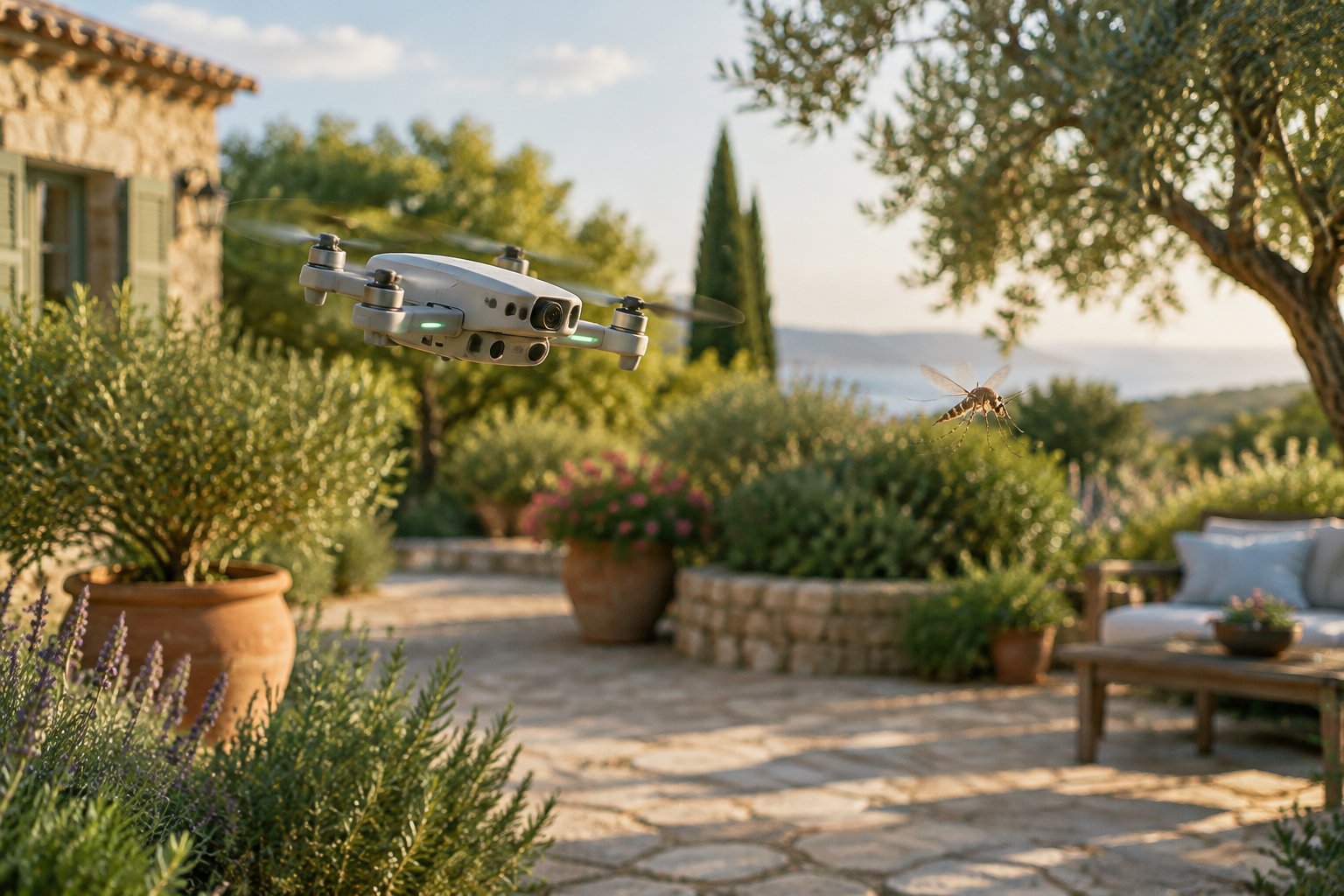
Scopri Tornyol, il drone autonomo che rileva, insegue e neutralizza le zanzare in volo: dal giardino alla protezione della salute pubblica.
Rimani aggiornato con WebMasterPoint
Un drone autonomo capace di individuare le zanzare e intercettarle in volo: Tornyol promette di trasformare la difesa del giardino e apre nuove prospettive per la salute pubblica. Ecco come funziona.
A 40?gram autonomous drone developed by French startup Tornyol can detect and intercept mosquitoes in flight. The device operates without a human pilot, patrolling defined garden perimeters and returning to its charging base when power runs low. Its core technology is an ultrasonic sonar called LeSonar2 that analyzes wingbeat signatures to distinguish mosquitoes from beneficial insects such as bees. By combining tiny tinywhoop drone mechanics with sophisticated signal processing, the system aims to replace chemical repellents with targeted mechanical strikes. The concept emerged from the founders expertise in signal processing and electronics, and the company joined Y Combinators fall 2025 batch.
How Tornyol detects and intercepts mosquitoes
The LeSonar2 module contains 380 microphones and 32 ultrasonic emitters operating at 40?kHz, feeding data to an FPGA processor that reconstructs a three?dimensional map of the surroundings. This setup can perceive movements as small as a few millimeters and locate targets up to roughly eight meters away. Each insect species produces a unique harmonic pattern in its wingbeat; the system treats these acoustic fingerprints like a barcode, allowing it to single out mosquitoes while ignoring pollinators. Once a mosquito is identified, the drone maneuvers and strikes it with its rotating propellers, ending the encounter in mid?air. The entire sequence:
- detection
- classification
- pursuit
- neutralization happens autonomously within seconds.
From garden guardian to public?health potential
After users define a patrol area in the mobile app, the drone launches, monitors the space and returns to its base to recharge. Tornyol estimates that about ten units could cover one square kilometer. The proposed subscription costs approximately $50 per month, with a $100 refundable deposit; deliveries in the United States are slated for 2027.
The 40-gram prototype has a detection range of up to eight meters and is designed to distinguish mosquitoes from pollinators. However, its effectiveness has yet to be demonstrated in real-world conditions. Tests have mainly taken place in controlled environments, and independent field results on interception rates or reductions in disease-vector populations have not been published.
Potential benefits include lower reliance on chemical pesticides and data on mosquito movement that could support efforts against malaria, dengue and West Nile virus. Wider adoption will depend on independent validation, reliable performance in varied outdoor conditions, clear regulation and costs that are justified by measurable results.